



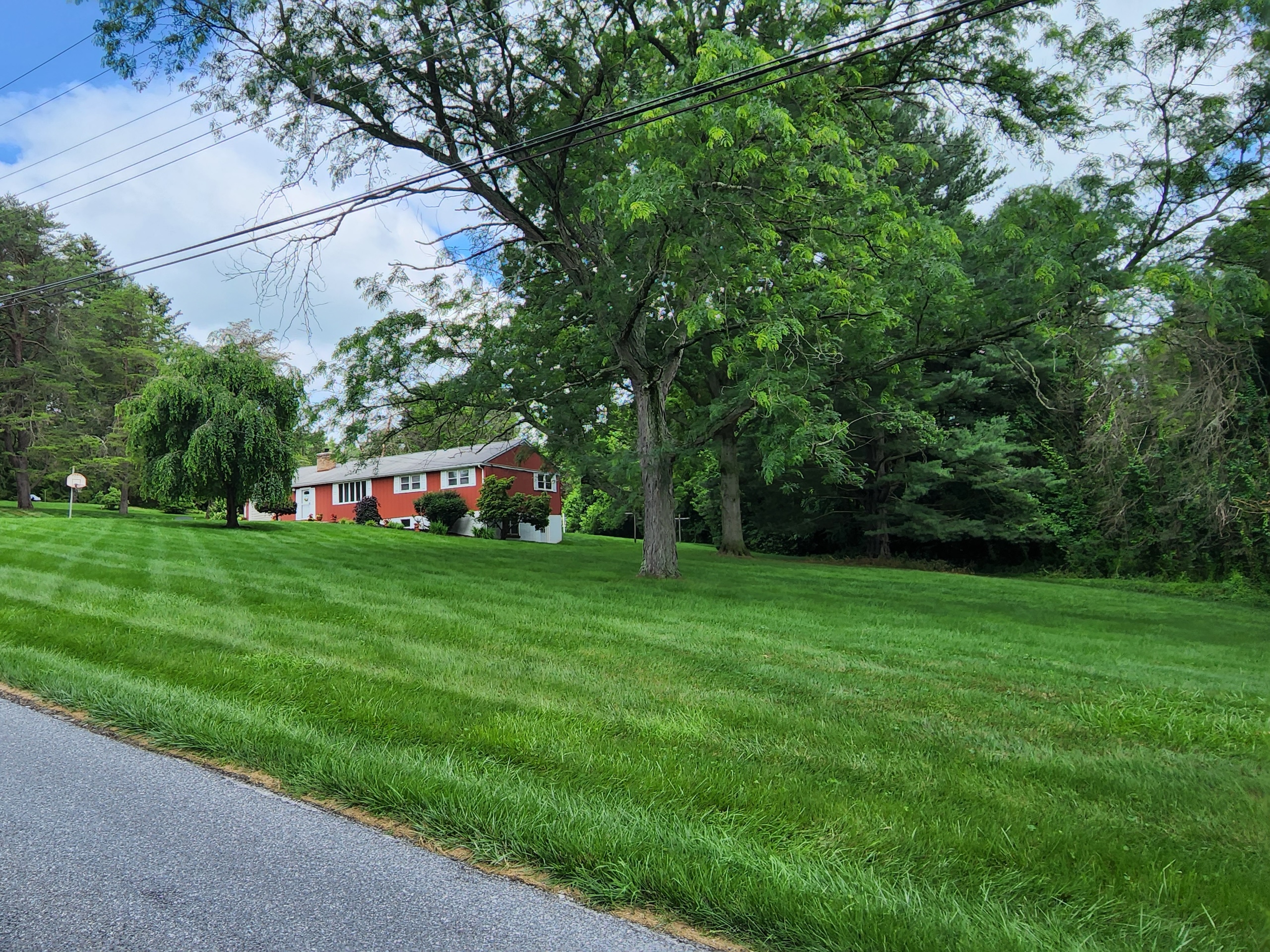
Ticks are a normal part of summer across Chester County, Delaware County, and the rest of Southeastern PA. That does not mean you have to give up the backyard, the wood line, or the evening walk. It means a little strategy goes a long way.
The most effective approach to ticks is not any single silver bullet. It is a few sensible layers working together: managing your property, building a couple of easy habits, and treating the areas where ticks actually concentrate. Here is how those layers fit.
First, where ticks actually are
Ticks are not spread evenly across your yard. They gravitate to specific cover, and knowing where changes how you defend against them.
They tend to concentrate in:
- Wood lines and the brushy edges of a property
- Tall grass along fields or open space behind the home
- Landscape beds and dense ornamental plantings
- Leaf litter and shaded, damp overgrowth
The pattern to remember: the open, well-kept middle of a lawn is usually low risk. The edges, the transitions between mowed lawn and everything wilder beyond it, are where ticks wait. That transition zone is the heart of the problem, and the heart of the solution.
The health stakes, kept in perspective
There is no need for alarm here, just awareness. Ticks in our region carry a real, ongoing concern of Lyme disease, which is reason enough to take sensible precautions.
One development worth knowing about, without losing sleep over it:
The lone star tick has been expanding into the mid-Atlantic. It can trigger alpha-gal syndrome, an uncommon but real allergy to red meat. The large majority of bites never lead to it, but it is a genuine and increasingly discussed reason to keep tick populations down around the home.
Awareness, not anxiety. A layered plan handles the rest.
Layer 1: What you control around the yard
A good amount of tick pressure comes down to habitat, and habitat is something you can influence. The goal is to make the areas near your living space less inviting.
- Keep the lawn well maintained, and knock back tall grass and overgrowth along the edges, where ticks harbor most.
- Clear leaf litter from beds and along fences and wood lines.
- Create a buffer between the lawn and any wooded area, such as a strip of wood chips or gravel, to discourage ticks from crossing into the yard.
- Keep play sets, seating, and gardens a bit away from the brushy edges rather than right up against them.
None of this eliminates ticks, but it meaningfully shrinks the zones where they thrive closest to your family.
Layer 2: A couple of easy habits
Simple routines cover the gap that property management cannot, especially if you are out hiking, gardening, or near the wood line.
- Do a quick tick check after spending time outdoors, on people and pets alike. Ticks often wander before they attach, so a check catches many before they become a problem.
- Check pets specifically, since they move through exactly the vegetation ticks favor and carry them back inside.
- Stick to mowed paths when walking through or around taller vegetation.
- Lighter clothing makes it easier to spot a tick before it finds skin.
These take a couple of minutes and quietly prevent most of the trouble ticks cause.
Layer 3: Treating where ticks concentrate
Property management and habits handle a lot. Targeted treatment handles the rest, and it is where our Organic Tick and Mosquito Program fits in.
Rather than blanketing the lawn, we focus on the harborage areas where ticks actually live and breed: the wood lines, landscape beds, and transition zones along the edges of the property. A few things worth knowing about how we approach it:
- Natural-derived products. We build our treatments around ingredients like cedar oil and garlic extract, chosen with families, pets, and pollinators in mind.
- A monthly regimen, May through September. One application is not the goal. Consistent monthly treatments through the season are what keep populations down, because a single treatment fades as pests move back in.
- Realistic, meaningful reduction. No responsible program promises to eliminate every tick, but a significant reduction in activity is what turns an unusable yard back into a comfortable one.
Why the layers matter together: treatment is most effective when the property is not fighting it. A well-managed yard plus targeted treatment plus a couple of good habits is far stronger than any one of those alone.
A few common questions
Do I really need this if my lawn is well kept?Even a tidy lawn often has brushy edges, beds, or a wood line nearby, and those are exactly where ticks harbor. The edges matter more than the open turf.
Is the organic approach as effective?It is designed to bring pest activity down meaningfully while using natural-derived ingredients. For most properties in our area, that balance is the point.
When should treatment start?The meaningful window in our region runs May through September. Getting on a regular schedule early in that window is more effective than reacting once pests are already thick.
A calm, layered approach for Southeastern PA
Ticks do not have to define your summer. With a well-managed yard, a couple of simple habits, and targeted treatment of the areas where ticks concentrate, families across Southeastern PA can enjoy their outdoor space with a lot more peace of mind.
If you would like to talk through your property or get pricing for the season, reach out to our team at 610-350-7854 or visit dtltotalturf.com. We are happy to take a look and help you build the right plan.