


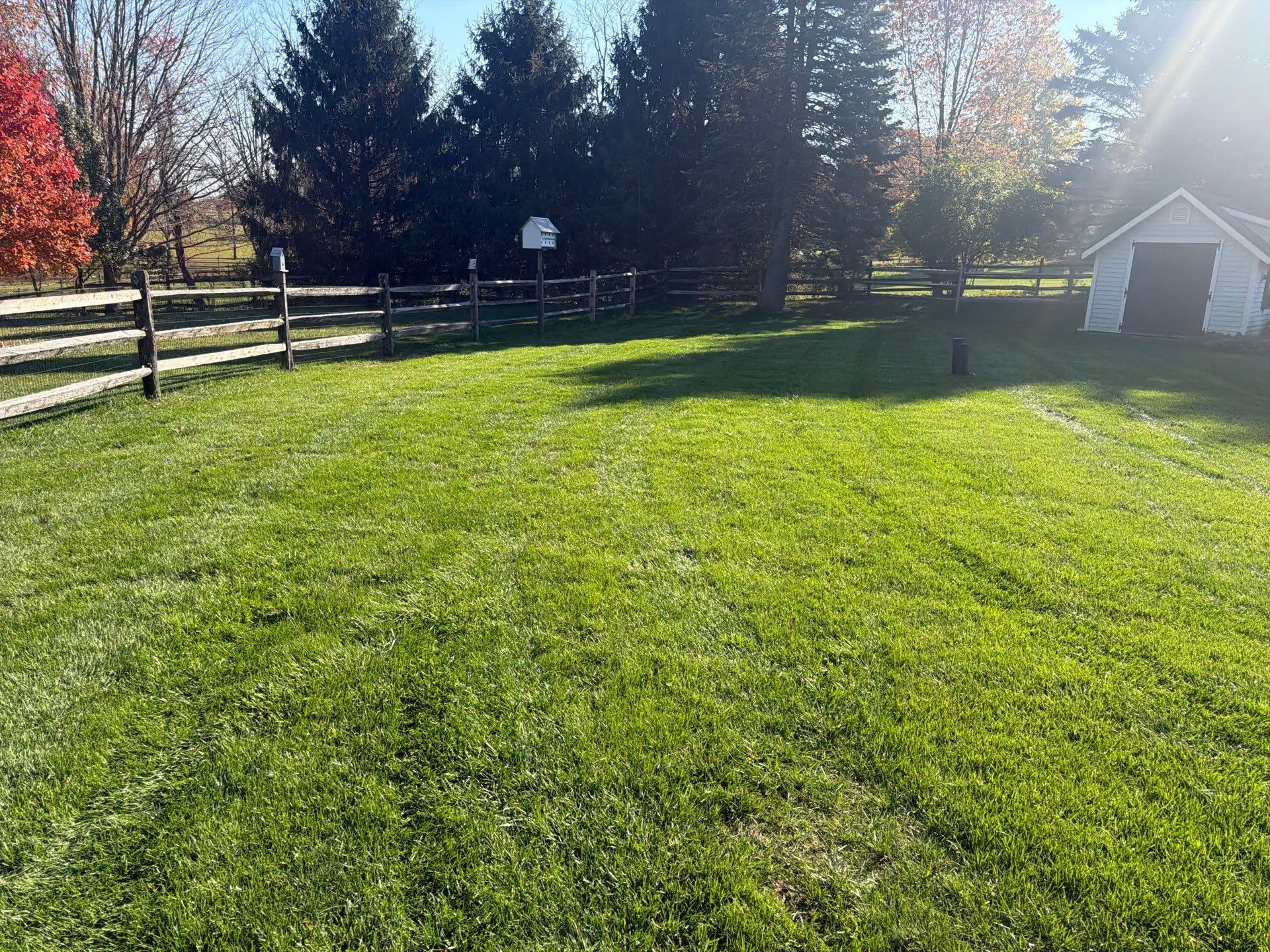
Aeration and overseeding season is winding down across Chester County. If your lawn was seeded in September or October, you're probably looking at a mix of things right now: patches of fine, bright green blades, some areas that still look thin, and a lot of little soil plugs that haven't quite broken down yet.
That's normal. A fall seeding is a long project, and most of it happens out of sight. Here's what's going on with that new grass and how to help it over the next several weeks.
Why We Seed in Fall in Southeastern PA
Our lawns are cool-season grasses, mostly tall fescue, Kentucky bluegrass, perennial ryegrass and fine fescue. New seed needs roughly 8 to 10 weeks of good growing conditions to establish. In fall, the soil is still warm from summer while the air is cooling off, so seedlings can put their energy into roots instead of fighting heat. Weed pressure is also dropping.
Spring is a much harder window. The jump from cool to hot happens fast here, and young grass usually hasn't rooted deeply enough by July to handle it. That's why we steer almost everyone toward fall seeding and why the fall work you just had done matters so much for next year.
The First Few Weeks: Germination Comes in Waves
Seed doesn't all come up at once. Perennial ryegrass tends to show first, often within a week or two. Tall fescue follows. Kentucky bluegrass is slow and can take three weeks or more, so an area that looks bare today may still have seed waiting in the soil.
If parts of the lawn look patchy right now, give them time before deciding the seeding didn't take. The aeration holes help here. Seed that fell into them sits in good contact with the soil and tends to come up in small clusters, which fill in as the plants mature.
Watering New Seed as the Weather Cools
Moisture is the biggest factor in whether seed establishes. Until germination, the top layer of soil needs to stay damp, which usually means light, frequent watering rather than one long soak. Once the seedlings are up and growing, you can shift gradually toward deeper, less frequent watering so roots follow the moisture down.
As October turns to November, you'll need less irrigation because evaporation slows and fall rain often does the work. Keep an eye on dry stretches, though. Young grass that goes into winter in dry soil starts spring at a disadvantage.
Mowing Young Grass
You don't need to stop mowing because you seeded. In fact, regular mowing helps new grass thicken. Wait until the new blades are a bit taller than your normal cutting height, then mow with a sharp blade at 3.25 to 4 inches. A dull blade tears young grass, and a low cut stresses it.
Mow when the lawn is dry, avoid sharp turns on new areas, and leave the clippings in place.
Leaves and New Seed Don't Mix
This is the part of late fall that catches people off guard. A heavy layer of leaves sitting on young grass blocks light and holds moisture against the plants, and seedlings can thin out underneath it in a short time.
Try to keep leaves moving off seeded areas regularly instead of waiting for them all to drop. Mulching a light layer with the mower is fine, but if the leaves are thick enough to hide the grass, they need to come off. Go easy with leaf blowers and rakes on brand-new areas.
The November Feeding
The final application of our season goes down in November. It's a balanced fertilizer weighted toward nitrogen, phosphorus and potassium, and it's aimed at root growth and at establishing the fall seeding. Phosphorus is one we rarely apply on established lawns, but young grass benefits from it while it's building a root system.
You may not see much change on the surface. The benefit is underground, in stored energy the grass draws on in early spring.
What Winter Does to New Grass
Cool-season grass usually goes dormant when soil temperatures fall below about 50 degrees, which in our area tends to happen in late November or early December. New grass that had a decent start in September or October generally handles dormancy fine. Roots keep growing slowly on milder winter days whenever the ground isn't frozen.
A few habits help young turf through the cold months:
- Stay off the lawn when it's frosted or frozen. Frosted blades break easily and footprints can leave brown marks that last into spring.
- Pick up hoses, toys, furniture and anything else sitting on the grass.
- If we go weeks without rain or snow, a deep watering on a mild day is worth doing.
What to Expect in Spring
When the lawn wakes up, the fall seeding should look noticeably fuller than it does today, though it usually isn't finished. Seedlings that came up later in the fall will still be maturing, and it's common to see a few areas that need more time. A fall-seeded lawn typically keeps thickening through spring and into the following fall.
One thing to keep in mind: spring seeding and early-season weed prevention work against each other, because most crabgrass preventers also keep new grass seed from establishing. If you're thinking about touching up thin spots in spring, talk with us first so we can plan it around your program.
Looking Ahead to 2027
If your lawn was part of this fall's seeding, the most useful thing now is patience and a little care through November. If you didn't get on the schedule this year and you'd like a fall seeding and a full program next season, we've opened a waitlist for 2027. Give us a call at 610-350-7854 and we'll walk through what your lawn needs.