



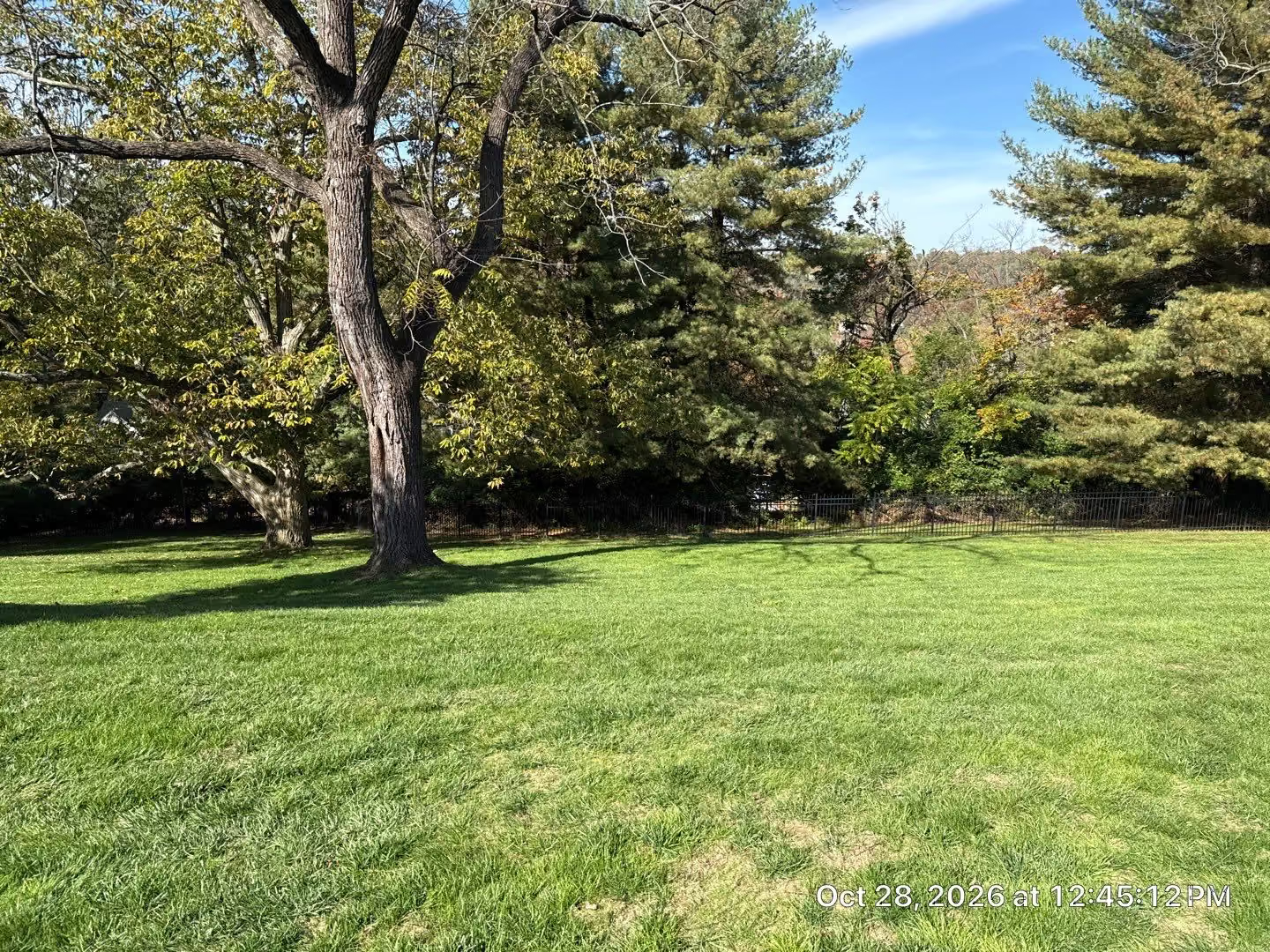
By late October, most of the year's lawn work in Chester County is behind us. Aeration and overseeding are wrapping up, the final feeding is coming in November, and growth is slowing down week by week.
It's also one of the best times of year to simply look at your lawn. The summer weeds have died back, the leaves haven't buried everything yet, and the turf is showing you, fairly honestly, how it handled the season. Twenty minutes with a cup of coffee and a notepad can tell you a lot about what next year should look like.
Here's what we look for when we walk a property this time of year.
Where Is the Grass Thin?
Start with density. Stand at a few points around the yard and look across the lawn at a low angle rather than straight down. Thin areas are easier to see that way.
Then ask why those spots are thin. A few common patterns:
- Thin along a fence line or under a big tree usually points to shade, and sometimes to tree roots competing for water.
- Thin along a path, a gate or the route the dog takes is usually traffic and compaction.
- A thin strip next to a driveway or walkway often means poor soil or heat coming off the pavement in summer.
The cause matters more than the spot itself. Seed alone won't hold in an area if the reason it thinned out is still there.
Notice How the Ground Feels
Push a screwdriver into the soil in a few places, ideally a day or two after rain. In healthy soil it should go in without much effort. If you have to lean on it in certain areas, that's compaction, and Chester County's heavier clay soils are prone to it.
While you're out there, look for low spots where water sits after rain, or areas that stay soggy for days. Drainage issues show up clearly in fall and they explain a lot of summer problems, from thin turf to disease.
Look for the Scars From Summer
Even after a lawn recovers, summer usually leaves some evidence behind. Irregular brown or straw-colored patches that never fully filled in can come from disease, grub feeding, surface insects, dog spots or something that sat on the grass too long. Each of those has a different fix, so it's worth noting where they are and roughly when they appeared, if you remember.
Patches of grass that look and feel different from the rest, coarser or lighter green, can be grassy weeds or a different grass type. Those are worth pointing out to whoever manages your lawn, since some need a specific plan.
Think About How You Use the Yard
This part has nothing to do with agronomy and everything to do with the plan. Did the kids wear down the same corner all summer? Is there a new play set, garden bed or patio coming next year? Are you hosting something in June and want the lawn at its best by then?
A good lawn program is built around the property and the people using it. Knowing what next year looks like for your family helps set priorities.
Consider a Soil Test
Most of what you see on the surface traces back to the soil. A soil test shows pH, nutrient levels and organic matter, and it takes the guessing out of decisions like whether you need lime or more potassium.
Fall and early winter are a good time to test, because amendments like lime need months to work into the soil. Corrections made now are in place before the grass comes out of dormancy in spring.
Write It Down While It's Fresh
By March, it's hard to remember where the bad spots were. Take a few photos and jot down notes with rough locations. "Back left corner by the shed, thin and hard." "Front bed edge, brown patch in August." That list becomes the starting point for next season.
A few items to note before winter:
- Thin areas and what you think is causing them
- Compacted or wet spots
- Leftover summer damage
- Any changes you're planning for the yard next year
Before You Put the Notebook Away
There's still some late-fall upkeep worth doing. Keep leaves from matting down on the lawn, keep mowing at 3.25 to 4 inches until growth stops, and stay off the grass when it's frosted. If your lawn was seeded this fall, give those areas a little extra attention through November.
Planning Your 2027 Lawn
If your walk turned up more questions than answers, that's what we're here for. We build every program around the soil and the property in front of us, and late fall is when we start planning the following season. We've opened a waitlist for 2027, and you're welcome to call us at 610-350-7854 to talk through what you're seeing.