



Best Practices for Watering Lawns in Pennsylvania & Delaware
Healthy lawns in Pennsylvania and Delaware depend on consistent watering, but local climate, soils, and seasonal weather patterns make when and how much you water just as important as how often. This guide covers best practices tailored for homeowners in these Mid-Atlantic states.



Climate & Regional Context
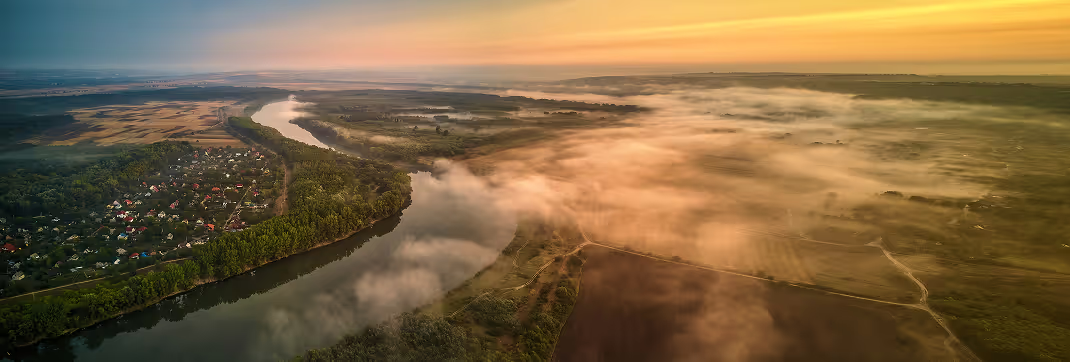
Pennsylvania & Delaware sit in a humid, temperate climate with cool-season grasses (Kentucky bluegrass, tall fescue, perennial ryegrass) as the dominant turf.
Summers bring high heat and occasional drought, while spring and fall are usually wetter.
Clay and silt soils (common in PA) hold water longer than sandy coastal soils (common in DE), so watering schedules differ slightly.
General Watering Rule
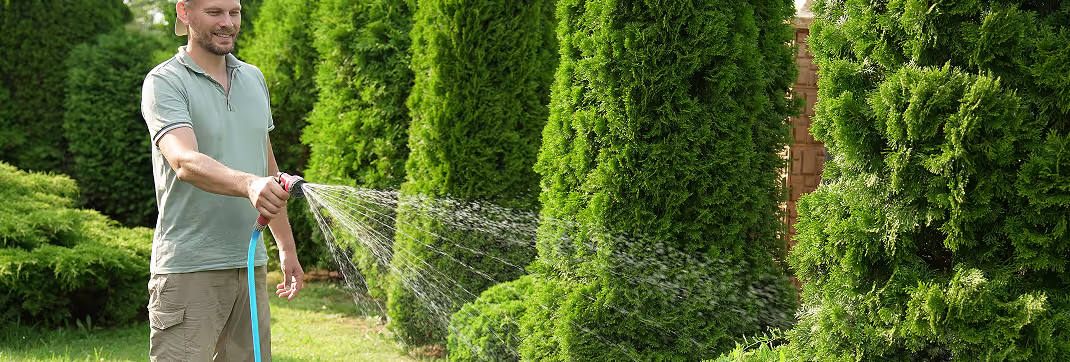
Lawns typically need 1–1.5 inches of water per week (from rainfall + irrigation).
Summers bring high heat and occasional drought, while spring and fall are usually wetter.
Clay and silt soils (common in PA) hold water longer than sandy coastal soils (common in DE), so watering schedules differ slightly.
Best Times to Water
Morning (4 a.m.–10 a.m.) is ideal:
- Less evaporation than afternoon.
- Grass dries during the day, reducing the risk of fungal disease.Avoid evening watering—moisture sits overnight, promoting dollar spot, brown patch, and other turf diseases.
Seasonal Adjustments
Spring (March–May): Often adequate rainfall; water only if the soil is dry.
Summer (June–August): Heat stress is common; supplement rainfall with irrigation to reach the 1–1.5 inch weekly target.
Fall (Sept–Nov): Important recovery period; maintain watering until consistent frosts.
Winter (Dec–Feb): Turf is dormant; no irrigation needed unless experiencing extreme drought and mild temps.
Soil & Regional Tips
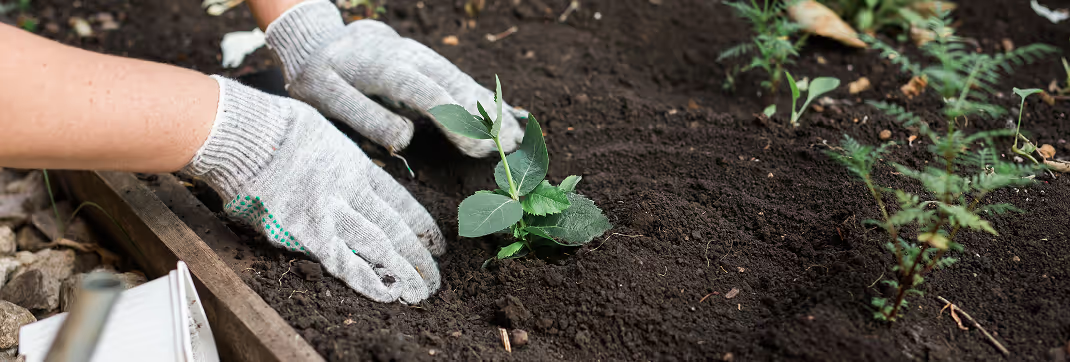
Pennsylvania (clay & loamy soils): Water more slowly to prevent runoff. Consider cycle-and-soak (watering in shorter intervals).
Delaware (sandy soils, especially near the coast): Water more frequently but in smaller amounts, as sandy soils drain quickly.
Tools & Techniques

Sprinkler types:
- Oscillating sprinklers—good for rectangular yards.
- Rotor sprinklers—better for larger lawns.
- Smart irrigation controllers—adjust watering based on weather data, reducing overwatering.Check uniformity: Place tuna cans or rain gauges around the yard to ensure even coverage.
Adjust for slopes/shade: Sloped areas dry out faster; shaded areas often need less water.
Conservation & Efficiency
Follow local watering restrictions (occasionally enforced in summer).
Mulch-mow clippings to help soil retain moisture.
Aerate compacted soil to improve infiltration.
Raise mowing height slightly in summer (3.5–4.5″) to shade soil and reduce evaporation.
Signs of Under- or Over-Watering
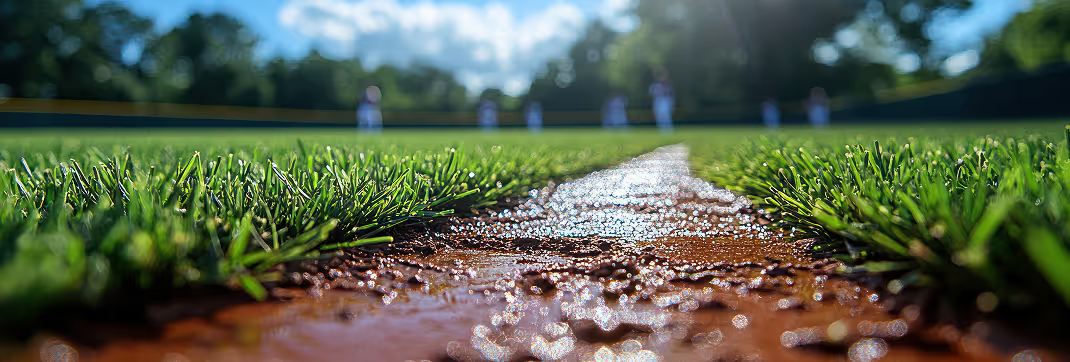
Under-watering:
- Grass turns bluish-gray.
- Footprints remain visible.
- Soil feels dry several inches down.Over-watering:
- Spongy turf, moss growth.
- Runoff or puddles.
- Increase in fungal diseases.
Local Considerations

Pennsylvania: Western PA can see more rainfall than eastern regions; irrigation may be less frequent.
Delaware: Coastal winds and sandy soils increase evaporation—lawns often need more supplemental watering despite rainfall.
Month-by-Month Lawn Watering Calendar (PA & DE)
Growth just beginning; rainfall usually sufficient.
Water only during dry spells when the soil is crumbly 2–3 inches down.
Frequent rains; supplemental irrigation is rarely needed.
Focus on monitoring soil moisture in sunny or sandy areas (especially in the Delaware region).
Grass is in full growth.
Begin deep watering if weekly rainfall is less than 1 inch.
Cool mornings are best for watering.
Warmer temps; rainfall becomes less reliable.
Start a consistent watering schedule (1–1.5 inches per week).
Peak summer stress.
Water deeply 2–3 times a week, early morning only.
Lawns may go dormant in extended drought—keep crowns alive with ½ inch every 2–3 weeks if conserving water.
Still hot; continue summer watering schedule.
Raise mowing height (3.5–4.5") to shade the soil and reduce evaporation.
Cooler nights return; rainfall often increases.
Maintain watering through early fall to aid recovery and root growth.
Prime recovery season; don’t stop too soon.
Continue watering until the first frosts.
Grass growth slows sharply.
Supplemental watering is only needed if it’s unusually dry and mild.
Turf dormant.
No irrigation needed unless an extreme winter drought occurs with unfrozen soil.
Month-By-Month Watering Calendar with Rainfall Averages
Rainfall figures (in inches):
- Philadelphia, PA: February (driest) ≈ 2.1", July (wettest) ≈ 3.7" Weather Spark
Quick Tips for Homeowners
Rainfall typically meets or exceeds lawn needs(1–1.5”/week) through much of the growing season—especially when monthly totals hit 3–4″.
Track weekly rainfall with a gauge or simple containers. When weekly totals fall under ~1″, resume irrigation.
Summer months (June–August) often combine heat and uneven rain—monitor closely and water deeply 2–3 times/week as needed.
Adjust for soil type: Clay in PA may hold moisture longer, while sandy areas in DE may need more frequent but lighter watering.
Monthly Breakdown
Final Tips for a Pro-Looking Lawn
Water 1–1.5 inches per week (rain + irrigation).
Deep, infrequent watering is better than frequent, shallow watering.
Best time = early morning (4–10 a.m.).
Adjust for soil type (clay vs sand), season, and lawn condition.
Use smart tools and conserve water responsibly.
FAQ: Lawn Watering in Pennsylvania & Delaware
In hot, dry stretches, aim for two to three deep waterings per week to reach the 1–1.5 inch total. Adjust if rainfall is sufficient.
That’s likely dormancy—a natural survival mechanism for cool-season grasses. A dormant lawn can survive 4–6 weeks without water, but light watering (½ inch every 2–3 weeks) helps crowns survive.
Use a rain gauge or a tuna can test. After a cycle, check how much water has accumulated. If it’s less than ½ inch, run another short cycle.
Always water in the morning (4–10 a.m.). Evening watering leaves lawns damp overnight, which promotes disease.
No. Shaded areas dry out more slowly and typically need about 25% less water than full-sun areas.


Looking For Premier Lawn Care Services?
We take care of hundreds of lawns in southeastern Pennsylvania. Contact us to schedule a property assessment with our agronomy team.